
Okay, so check this out—browser extension wallets are everywhere now. Wow! They’re convenient, and they make DeFi feel like clicking a few buttons in a web app. But convenience has teeth. My instinct said something felt off about trusting a shiny popup with millions of dollars of liquidity. Initially I thought a single seed phrase covered it. But then I dug into permission models, contract approvals, and chain-specific quirks and realized the attack surface is far bigger than I expected.
Seriously? Yes. Shortcuts you take on setup—reusing weak passwords, blindly approving token allowances, or not checking the network—can turn into catastrophic losses. Hmm… that sounds alarmist, but I’ve seen wallets drained because someone thought permissions were harmless. I’m biased, but the right extension wallet makes a real difference. And somethin’ about how most users treat approvals still bugs me—very very important to fix.
Let me walk you through practical ways to think about DeFi wallet security, multi-chain tradeoffs, and what features to prioritize when evaluating browser extension wallets. I’ll be honest: I don’t have a silver bullet. But I do have a set of rules-of-thumb and some tools I rely on repeatedly, especially when I’m juggling assets across Ethereum, rollups, and other EVM chains.
Why extension wallets are different from custodial apps
Extensions live in your browser. Short sentence. They talk directly to the pages you visit. That means a malicious dApp or a compromised website can prompt approvals or trick you into signing transactions. On the other hand, custodial apps hold your keys and handle recovery—so the trust model flips. At home in a coffee shop or on a shaky hotel wifi, that flip matters. On one hand, non-custodial means you control funds. Though actually, control comes with responsibility: private keys, seed phrases, and careful approval hygiene.
Here’s what bugs me about common advice: too many guides focus only on seed words and ignore ongoing permissions. You approve an allowance once, and it lives forever unless you revoke it. That persistent permission is often the weakest link. So, before we dig deeper, remember this simple mental model: keys = custody, approvals = access. Both need active management.
Core security features to demand from a multi-chain extension
Short list incoming—these are non-negotiable. Quick.
– Clear network isolation. Medium sentence explaining why this matters: the wallet should make switching networks explicit and hard to do by accident, so you don’t click “confirm” while a page is connected to a malicious RPC. Longer thought: ideally the wallet blocks transaction prompts from unknown origins or surfaces a distinct warning when switching to an RPC that’s not widely used, because sophisticated phishing can spoof familiar sites and target specific chains with tailored exploits.
– Granular approvals. Short. The wallet should let you approve exact amounts for a single transaction instead of full-allowance forever. Medium sentence: this reduces lifetime exposure to token drains. Longer sentence with a subordinate clause: even when a dApp requests an approval UI that’s user-friendly, a strong wallet will offer a revoke or reduce option inline so users reset permissions without digging into blockchain explorers.
– Hardware wallet support. Short sentence. Medium explanation: being able to attach a Ledger or similar device keeps your private key off the host machine. Longer thought: hardware signatures mitigate a huge chunk of malware risk, because an attacker on your computer can’t sign a transaction without physical approval on the device, and that friction matters in real-world attack scenarios.
– Transaction simulation and advanced gas controls. Short. Then medium: previewing what a transaction will do (approve vs swap vs bridge) helps avoid signing a malicious contract call. Longer: good wallets will show token flows and contract addresses, and some even simulate execution to catch reentrancy or high-slippage traps before you hit confirm.
Multi-chain realities: tradeoffs you can’t ignore
Multichain support is sexy. Who doesn’t like juggling ETH, Arbitrum, BSC, Polygon, and more from one UI? But hey—more chains mean more complexity. Short. Medium: each additional chain brings unique RPC endpoints, explorer integrations, and contract standards that the wallet must handle correctly. Long: if the wallet implements chains sloppily or uses third-party RPCs without redundancy, users could be fed bad data, see incorrect balances, or unknowingly approve transactions on a malicious custom RPC.
My instinct often leads me to prefer wallets that are opinionated—meaning they support a curated set of chains well—instead of wallets that claim every chain under the sun but gloss over critical UX and safety checks. Initially I thought «all chains = freedom.» But then I noticed the subtle UX leaks: confusing chain names, duplicate token listings, and approval prompts that looked identical across unrelated chains. Actually, wait—let me rephrase that: it’s not freedom if it costs you security or clarity.
Usability features that actually improve safety
Short. Medium: features like transaction history with human-readable descriptions, token labeling (so you don’t confuse a scam token with the real one), and clear indicators for unverified contracts reduce mistakes. Longer thought: a wallet that surfaces source verification, contract auditor tags, or ENS-linked token labels helps less-experienced users make safer choices without forcing them to be blockchain forensics experts.
Also, import flow matters. I hate import-by-seed-field that looks identical to a password entry. Real wallets provide copy-resistant UIs, caution screens, and optional passphrase layers. Even small things—like a bold banner telling you not to paste your seed on websites—help. (Oh, and by the way… use a hardware wallet for big holdings.)
When to consider a specific wallet
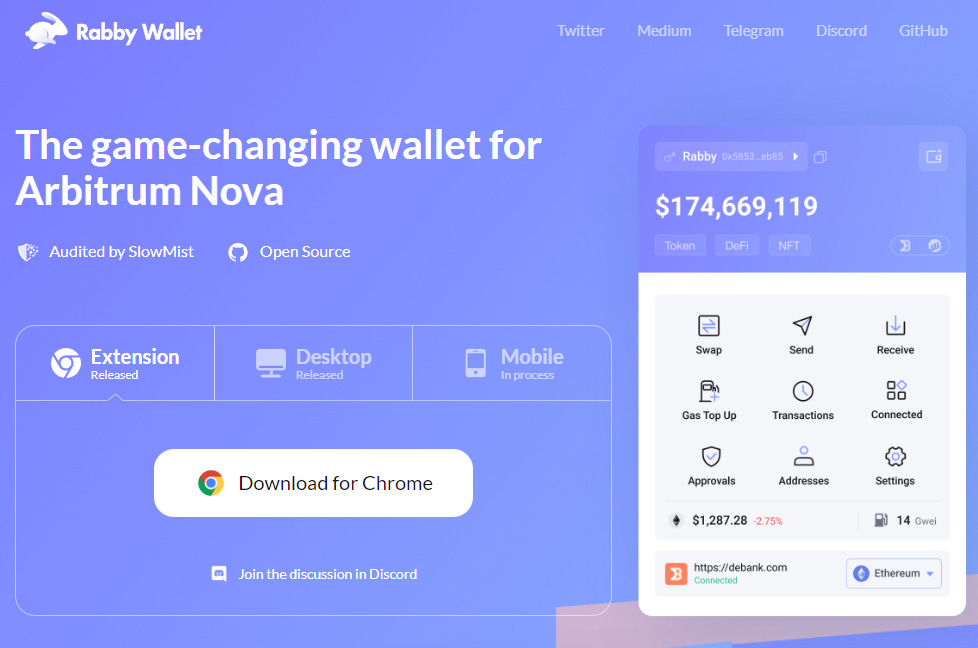
Okay, here’s the practical angle: if you want a wallet that balances security and multi-chain convenience, look for one that ticks the boxes above and also invests in continuous security audits, bug bounties, and a transparent dev process. One solution I often recommend for dynamic DeFi users is to try a wallet with a strong permissions model and a clean UX for managing allowances. If you want to test a wallet quickly, try the rabby wallet download flow and check how it presents approvals, hardware support, and chain switching—the onboarding experience will tell you a lot.
Short aside: don’t just read the feature list. Try performing a revoke, attach a hardware device, and simulate a swap. Medium: that hands-on test exposes where a product cuts corners. Long: sometimes a wallet will have a slick marketing page but when you try to revoke an allowance the UI buries the feature three menus deep, which is a pretty good sign the product wasn’t built with permission hygiene in mind.
Common questions people actually ask
How do I revoke token approvals?
Use the wallet’s permissions or approvals tab. Short. Medium: many wallets show all active allowances and let you revoke or reduce them. Long: if your wallet doesn’t surface this clearly, use a trusted third-party revocation tool (and double-check the contract addresses) or move to a wallet that makes revocation a first-class action because doing it through the blockchain directly can be technical and risky.
Is a browser extension safe on public Wi‑Fi?
Short answer: partially. Short. Medium: public networks increase the risk of man-in-the-middle attacks targeting RPC endpoints or phishing sites. Longer: combine browser hygiene with hardware wallets and only use vetted RPCs; avoid signing anything on public networks unless you’ve verified the transaction details on a separate device or via hardware confirmation.
What about mobile vs extension wallets?
Mobile wallets are convenient and can be secure, but they trade desktop usability for on-the-go access. Short. Medium: some mobile wallets use secure enclaves and have better isolation, though extensions are more convenient for web dApps. Long: consider using a hardware wallet with both extension and mobile support to get the best of both worlds—security from the device and convenience from the interfaces.
So where does that leave you? Curious, cautious, and a little annoyed at how sloppy many UX teams still are. I’m not 100% sure there’s one perfect product, but if you prioritize explicit permission controls, hardware integration, clear chain isolation, and a dev team that communicates about security, you’ll be in a much better place. Something felt off the first time I watched a friend sign a lifetime approval during a lunch break—seriously—and I’m writing from that experience. Try, test, and keep small balances on experimental setups. And yes… back up your seed. Really. Don’t skip it.
Comentarios recientes